

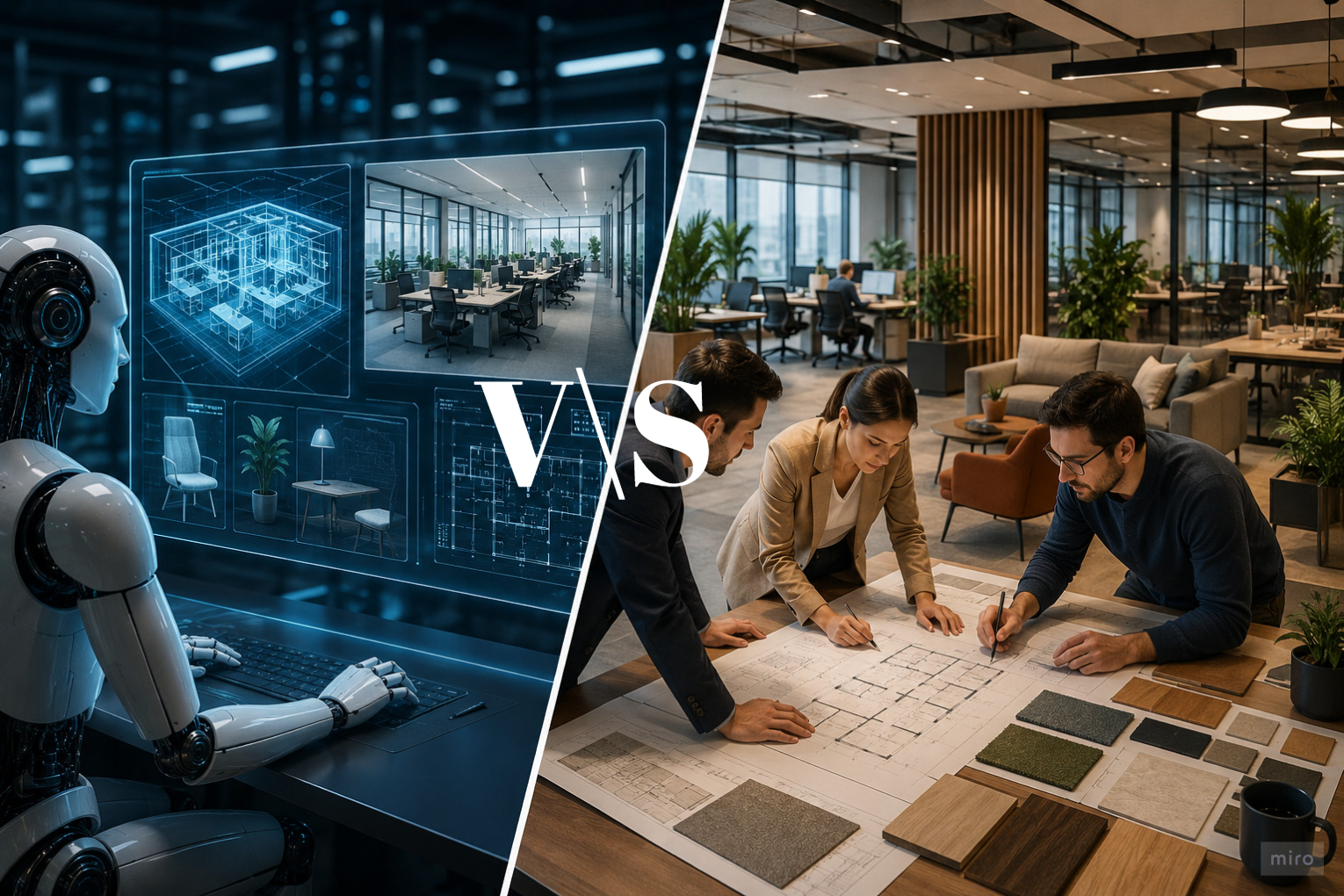
Artificial Intelligence has introduced a new era in the interior design industry. AI-powered tools can generate design concepts, create 3D visualizations, suggest furniture arrangements, and speed up the initial planning process. However, commercial interior design is not only about generating visually appealing ideas. Creating a successful office environment requires understanding human behavior, business objectives, technical requirements, and real-world execution challenges—areas where traditional interior design expertise continues to play a vital role.
Human Understanding Creates Workspaces with Purpose
AI can analyze data and generate multiple layout options, but it cannot truly understand a company’s culture, employee interactions, future expansion plans, and brand identity. Experienced interior designers evaluate how a business operates and translate those requirements into practical, comfortable, and productive workplaces.
Site Experience and Technical Knowledge Cannot Be Replaced by AI
Every commercial project comes with unique site conditions, structural limitations, building regulations, and technical requirements. From electrical planning and HVAC coordination to acoustics, lighting, and material selection, interior designers use practical knowledge and on-site experience to solve challenges that AI cannot independently manage.
Creativity, Emotion, and Problem-Solving Require a Human Perspective
While AI can produce impressive concepts within seconds, it often relies on existing data and patterns. Traditional interior design brings original thinking, emotional intelligence, and creative problem-solving to develop spaces that reflect a brand’s personality and meet the specific needs of the people using them.
Successful Commercial Interiors Need End-to-End Execution
A great commercial interior project does not end with a design concept. It requires coordination between designers, contractors, engineers, suppliers, and clients throughout the entire execution process. Human professionals make decisions during construction, address unexpected challenges, maintain quality standards, and ensure the final workspace functions as intended.
Conclusion: The Future of Interior Design Is a Balance Between AI and Human Expertise
AI is transforming interior design by making visualization, research, and early-stage planning faster than ever before. However, the foundation of successful commercial interior design still relies on human experience, technical expertise, creativity, and real-world problem-solving. The most effective approach is not choosing between AI and traditional methods but combining advanced technology with skilled professionals to create intelligent, functional, and future-ready workspaces.